THE CIVIL RIGHTS MOVEMENT
IN
WEBQUEST
Mr. Coriale
Problem: African-Americans being denied equal rights prior to 1964.
Policy: Civil Rights Act of 1964
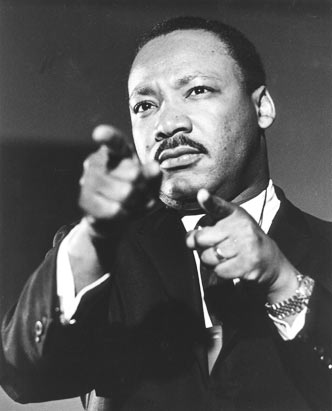
"The best way to solve any
problem is to remove its cause."
-Martin
Luther King, Jr., 1964
|
|
|


INTRODUCTION
Over the course of American history various minority groups have been denied equality. African-Americans have long been denied equal rights, especially since the end of the Reconstruction. In 1865, the American Civil War came to end. Slavery was officially abolished with the ratification of the Thirteenth Amendment in December 1865. Shortly after this began the period known as Reconstruction (1865-1877), a time when African-Americans gained rights of citizenship through the ratification of the Fourteenth Amendment (1868) and African-American males were granted the right of suffrage through the ratification of the Fifteenth Amendment (1870). When Reconstruction ended in the American South in 1877, slowly the rights and freedoms given to African-Americans were denied through the adoption of the Jim Crows laws, the literacy test, poll tax, and the grandfather clause among other actions. In 1896, the United States Supreme Court legally supported the denial of equal rights to African-Americans in ruling that “separate but equal” is constitutional in the case of Plessey v. Ferguson. For the next half century, African-Americans worked toward ending this social injustice.
TASK
You will meet in groups of four to discuss the social problems caused by denying rights
to African-Americans and the actions taken by the federal government in response to this
issue. You will create a “newscast” describing the problems you found at your selected event and the policy (ies) that was (were) enacted. You are to examine the success of the policy (ies) adopted.
PROCESS/ RESOURCES
1. You will be assigned a specific event from the Civil Rights era and in your group you are to take on one of the following roles:
Newscaster (1): Will lead the newscast presentation, write a script, and assist in conducting research on the story. The Newscaster will also assist other group members in completing their tasks
News Reporter (2): Will research the story by examining websites on the topic,
write a script. Present a news story from the event describing the problem and policy adopted
Editor (1): This individual will lead the organization of the newscast
and coordinate the information to be presented. The editor will maintain all research materials for the group’s use
Each of you will actively participate in the development of the “background sets” for the newscast using PowerPoint or some other creative idea for a set. It should include graphics and sound. You will all also collaborate and create one 30-second advertisement from the year of your event.
The events from the Civil Rights Era you will be assigned include one of the following:
·

Brown v. Board of Education (1954)

·
·
· Woolworth’s Sit-in (1960)
·
March on
·
March on
· Civil Rights Act of 1964 Signing (1964)

(Images Source: https://www.google.com/images?hl=en&q=civil%20rights%20images&safe=active&um=1&ie=UTF-8&source=og&sa=N&tab=wi )
2. You are to use the four-step American History Public Policy Analyst (AHPPA) to complete the above task and incorporate these finding in your newscast. Every group member will use the text and websites listed below to complete the information on each of the four worksheets. Your newscast should include images from the Internet, with proper citation, that represent the event of your newscast. Each group’s newscast will be limited to five minutes including one 30-second advertisement. You will be graded by the rubric listed below.
3. Your newscast should show evidence of discrimination, racism, and violence associated with your assigned event. Your evidence needs to demonstrate that this problem existed in the United States South and determine its causes and effects. You must also discuss the proposed possible public policy solutions. You need to follow the four steps of the AHPPA in your newscast/ research.
4. Each group will create a graphic organizer (SEE BELOW FOR EXAMPLE) for all of the steps of your research according to the steps of American History Public Policy Analysis (AHPPA). Each organizer will show the information gathered in the PPA worksheets. This should assist you in writing your newscast script.
5. Every group needs to complete and submit the following AHPPA worksheets, which are hyperlinked below:
6. You need to use the TIPS AHPPA worksheets as a guide to your graphic organizer and as a way to analyze the problem.
7. BEFORE the newscast is done all graphic organizers, worksheets, scripts,
background sets, etc. need to be submitted to me at least TWO (2) DAYS BEFORE conducting the newscast.
Sources:
Be sure to check the following links prior to examining the websites below or your own websites.
LINKS: Website Evaluation
- http://hiphopspy.com/wp-content/uploads/2010/01/400martin_luther_king_jr.jpg
- http://3.bp.blogspot.com/_9UvnYuNoPb0/S7kd8_8g75I/AAAAAAAAAIc/fqhTsnBF9Ns/s1600/martin-luther-king-jr.jpg
- http://www.cas.buffalo.edu/classes/eng/willbern/BestSellers/Mocking/Rosa_Parks_1956.jpg
- http://marlinsallyvis.typepad.com/.a/6a00d8341c63cd53ef0133ed840444970b-800wi
- http://americanhistory.si.edu/brown/history/6-legacy/images/sit-in.jpg
- http://booklineandsinker.com/wp-content/uploads/2010/04/Birmingham.jpg
- http://blog.reidreport.com/wp-content/uploads/2009/09/mlk-wash.jpg
- http://sdgln.com/files/civil_1964-3535.jpg
- http://www2.maxwell.syr.edu/plegal/ppa/intro.html



EVALUATION
Below is a rubric that I will use to grade your completed web quest. You are expected to review this rubric prior to and throughout the creation of your newscast.
|
|
4 |
3 |
2 |
1 |
0 |
Total |
|
Level
of Involvement |
All members within the group are performing
the task and are actively involved. The group consistently
stays focused on the task and what needs to be done. Very self-directed. |
All but one member
within the group are performing the task and are actively involved.
All but one member
focuses on the task and what needs to be done most of the time. |
More than half of
the group are not performing the task and are not actively involved. More than half of the group members must sometimes be reminded to stay on task. |
Only one group
member is performing the task and actively involved. All other group members must be constantly
reminded to stay on task. |
None of the group
members are performing the task or actively involved. The activity is not done. |
_____/
4 |
|
Completed
Graphic Organizer |
The organizer is completely and accurately done. |
For the most part,
the organizer is completely and/ or accurately done with the exception of one
error. |
Only half of the
organizer is completed and/ or contained three or less errors. |
The majority of the organizer is not
complete and/ or contained more than four errors. |
The organizer is
not complete. |
_____/ 4 |
|
Writing |
The script is well
written and researched, is historically accurate, contains no grammatical/
spelling errors, has correct citations, and/ or contains a higher level of
vocabulary. |
The script is well
written and researched for the most part, has only two or less historical
inaccuracies, contains two or less grammatical/ spelling errors, has correct
citations with only two or less errors, and/ or has some higher level
vocabulary. |
The script is only
averagely written and researched, has three or more historical inaccuracies,
contains five or less grammatical/ spelling errors, has three or more errors
in citation, and/ or has average vocabulary. |
The script is
poorly written and researched and, is historically inaccurate, contains more
than six grammatical/ spelling errors, has no citation, and/ or has a poor
choice of vocabulary. |
The script is not
written. |
_____/ 4 |
|
Presentation
(Newscast & Advertisement) |
The presentation
exceeds the requirements, demonstrates a thorough understanding of the
content is well rehearsed and organized, makes excellent use of the
technology available, and demonstrates the group’s full potential. |
The presentation
meets the requirements, demonstrates a good understanding of the content, is
well rehearsed and organized for the most part, uses some of the technology
available, and demonstrates the group has some potential. |
The presentation
meets the requirements with the exception of one of the elements,
demonstrates an average understanding of the content, is not well rehearsed
and organized, uses only limited technology, demonstrates limited group
potential. |
The presentation
did not meet two or more of the requirements, demonstrates little or no
understanding of the content, is not rehearsed and organized, uses no
technology available, and demonstrates no group potential. |
The presentation
was not done. |
_____/ 4 |
|
Completed
On Time |
All aspects of the
activity are completed on time. |
All but one of the
aspects of the activity is completed on time. |
Two or more of the
aspects of the activity are not completed on time. |
The activity was
completed more than two days beyond the due date. |
The activity is not
done. |
_____/ 4 |
TOTAL _______/ 20 x 5 =
________
CONCLUSION
When you have finished this web quest, you will be able to:
ü Identify and discuss how minority groups, such as African-Americans, were denied equality since the end of Reconstruction
ü Discuss the social problems caused by denying rights to African-Americans
ü Analyze and evaluate the effectiveness of the federal government’s response to the issue of African-American equality
(Source: http://www.p12.nysed.gov/ciai/standards.html)
SOCIAL STUDIES
Standard 1: History of the
Students will use a variety of intellectual skills to demonstrate their
understanding of major ideas, eras, themes, developments, and turning points in
the history of the
Standard 5: Civics, Citizenship, and Government
Students will use a variety of intellectual skills to demonstrate their
understanding of the necessity for establishing governments; the governmental
system of the
ENGLISH LANGUAGE ARTS
Standard 1: Language for Information and
Understanding
Students will listen, speak, read, and write for information and
understanding. As listeners and readers, students will collect data, facts, and
ideas; discover relationships, concepts, and generalizations; and use knowledge
generated from oral, written, and electronically produced texts. As speakers
and writers, they will use oral and written language that follows the accepted
conventions of the English language to acquire, interpret, apply, and transmit
information.
Standard 2: Language for Literary Response and
Expression
Students will read and listen to oral, written, and electronically produced
texts and performances from American and world literature; relate texts and
performances to their own lives; and develop an understanding of the diverse social,
historical, and cultural dimensions the texts and performances represent. As
speakers and writers, students will use oral and written language that follows
the accepted conventions of the English language for self-expression and
artistic creation.
Standard 3: Language for Critical Analysis and
Evaluation
Students will listen, speak, read, and write for critical analysis and
evaluation. As listeners and readers, students will analyze experiences, ideas,
information, and issues presented by others using a variety of established
criteria. As speakers and writers, they will use oral and written language that
follows the accepted conventions of the English language to present, from a
variety of perspectives, their opinions and judgments on experiences, ideas,
information and issues.
Standard 4: Language for Social Interaction
Students will listen, speak, read, and write for social interaction. Students
will use oral and written language that follows the accepted conventions of the
English language for effective social communication with a wide variety of
people. As readers and listeners, they will use the social communications of
others to enrich their understanding of people and their views.
MATHEMATICS, SCIENCE, & TECHNOLOGY
EDUCATION
Standard 5: Technology
Students will apply technological knowledge and skills to design,
construct, use, and evaluate products and systems to satisfy human and
environmental needs.
Standard 6: Interconnectedness: Common Themes
Students will understand the relationships and common themes that connect
mathematics, science, and technology and apply the themes to these and other
areas of learning.
Standard 7: Interdisciplinary Problem Solving
Students will apply the knowledge and thinking skills of mathematics, science, and technology to address real-life problems and make informed decisions.
NEWSCAST SCRIPT GRAPHIC ORGANIZER
Group Members: _________________________ Social Problem:
_________________________
_________________________ ________________________
_________________________
Assigned Event: _________________________ Time Period: ____________
