Super Social Detectives!
Rebecca Jung
P.S. 146 Ann M Short / Technology & Health
Quick Links:
Overview
Process: The Social Detective Process [integrated PPA Steps]
The Social Detective Process Task 1 What's the Issue? (PPA Steps: Defining the Problem & Gathering Evidence)
The Social Detective Process Task 2 Feeling the Feelings (PPA Steps: Gathering More Evidence & Identifying Causes)
The Social Detective Process Task 3 Finding Solutions (PPA Steps: Developing & Selecting Solutions)
The Social Detective Process Task 4 Share Your Discoveries! (PPA Steps: Communicating Your Solution)
Resources: Your Online Investigation Tools (Websites)
Evaluation: How You Will Be Evaluated
New York State Learning Standards
Conclusion: Your Social Detective Legacy
Your Social Detective Mission Overview
Welcome to your mission headquarters! Your job is to explore the internet and discover important information about social issues and feelings. We're going to use our special PPA Steps to help us understand and analyze our social problem.
|
Problem: There are different tricky situations that kids face that are causing how students feel and interfere with their school life. |
Introduction [Your Social Detective Mission]
Have you ever had a day when things just felt… tricky? Maybe a friend said something that made you sad, or you felt pressure to do something you weren't sure about. Perhaps there was a big change at home, or someone was being mean to you or another kid. These kinds of things are called "social issues," and they can make your feelings go all mixed up. They can make it hard to feel good about yourself and to get along with others.
In this WebQuest, we're going to become super social detectives! We'll explore different tricky situations that kids face, like bullying, fitting in, disagreements with friends, or big changes at home. Our mission is to understand how these problems can make kids feel, and most importantly, discover clever ways to handle them and build strong, happy feelings inside. Get ready to think, explore, and discover how to make our friendships and feelings stronger!
Tasks
|
|
Your job is to explore the internet and discover important information about social issues and feelings, using the Social Detective Process [PPA Steps] to help you find the best solutions to each social issue. Once you've gathered so much important information and thought about solutions, create and share what you've learned with others so they can be prepared too!
○ Create a poster about one or two social issues and how to handle them. (Link to Poster Rubric) ○ Write and draw a comic strip showing a social issue and a good way to solve it. (Link to Comic Strip Rubric) ○ Prepare a short presentation to teach your classmates about one issue. (Link to A Short Presentation Rubric) ○ Write a short story about a character who faces a social issue and finds a solution. (Link to Writing A Short Story Rubric)
○ What the social issue is (Define the Problem). ○ How it might make someone feel (Evidence and Causes). ○ At least one way to handle it or get help (Your Developed and Selected Solution). |
|
|


The Social Detective Process [integrated PPA Steps]
Task 1: What's the Issue? (Defining the Problem & Gathering Evidence)
Your first task is to understand the different social issues we're talking about and gather some basic information. You will explore these topics:
● Bullying: What is bullying? What does it look like? (Hint: It's not just hitting! It can be words or leaving someone out.)
● Peer Pressure: What does it mean when friends or classmates try to get you to do something you're not sure about?
● Conflicts with Friends: How do disagreements or arguments happen between friends?
● Changes in Home Life: How can big changes at home (like moving, a new baby, or parents separating) affect a kid?
Your Mission Steps:
1. Use the websites and search information about each of these topics.
2. Write down a simple definition for each social issue in your own words. (This helps you Define the Problem).
3. Write down one or two examples of what each issue might look like for a kid your age. (This is part of Gathering the Evidence).
Task 2: Feeling the Feelings (Gathering More Evidence & Identifying Causes)
Now that you know about the issues, let's think about how they make people feel and start thinking about why they happen.
Your Mission Steps:
1. For each social issue from Task 1, think about or research how a kid facing that issue might feel. (More Gathering Evidence about the impact).
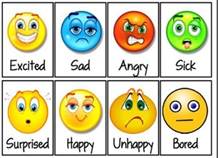
2. Write down a list of feelings for each issue (e.g., How might someone feel if they are being bullied? How might someone feel if their friends are pressuring them?). Think about feelings like sad, angry, scared, confused, lonely, worried, frustrated, etc.
3. Think about why they might feel that way. Write down one sentence explaining the "why" for each issue. (This helps you Identify the Causes).
Task 3: Finding Solutions (Developing & Selecting Solutions)
Being a social detective isn't just about finding problems; it's about finding ways to help! You'll brainstorm and choose the best ways to handle these issues.
Your Mission Steps:
1. For each social issue, research different ways kids can handle or get help with that problem. (This is part of Developing Solutions).
2. Look for ideas like:
○ Talking to a trusted adult (parent, teacher, counselor).
○ Talking to the person they have a conflict with (in a safe way).
○ Walking away from peer pressure.
○ Finding ways to feel better when things are tough at home.
○ Being a good friend and helping others.
3. Write down at least two different solutions or ways to get help for each social issue. (You are starting to Select the Best Solution by finding good options).
(Note: Evaluating an existing policy/what people usually do (Step 4 in the process) is something you can think about as you do your research. Are the usual ways of handling these problems working? Why or why not?)
Task 4: Share Your Discoveries! (Communicating Your Solution)
Great job, Social Detective! You've gathered so much important information and thought about solutions. Now it's time to share what you've learned with others so they can be prepared too!
 Your
Mission Steps:
Your
Mission Steps:
Choose one way to share your discoveries. Here are some ideas:
○ Create a poster about one or two social issues and how to handle them. (Link to Poster Rubric)
○ Write and draw a comic strip showing a social issue and a good way to solve it. (Link to Comic Strip Rubric)
○ Prepare a short presentation to teach your classmates about one issue. (Link to A Short Presentation Rubric)
○ Write a short story about a character who faces a social issue and finds a solution. (Link to Writing A Short Story Rubric)
Make sure your presentation includes:
○ What the social issue is (Define the Problem).
○ How it might make someone feel (Evidence and Causes).
○ At least one way to handle it or get help (Your Developed and Selected Solution).
Get ready to present your amazing work!
Resources: Your Online Investigation Tools
(Back to task 1) (Back to task 2) (Back to task 3) (Back to task 4)
|
As a Social Detective, you'll need some safe and helpful websites to gather your information. Here are some places you can look: ● stopbullying.gov/kids (For Kids): Learn about bullying and how to get help. ● PACER's Kids Against Bullying: Find out more about preventing bullying with fun activities. ● Nemours Kids Health: Read about how to handle peer pressure. ● Childline: Get tips for solving problems with friends. ● Social Worker's Toolbox: Find booklets to help understand and cope with family changes. ● Kids First Law Center: Discover resources for kids dealing with divorce and separation. Remember to always use the internet safely and ask your teacher or a trusted adult if you have any questions about a website! Resources: Helpful Books You can also learn a lot from reading stories! Ask your teacher or librarian if they have these books: "The Invisible Boy" by Trudy Ludwig (about feeling left out) "My Mouth Is a Volcano!" by Julia Cook (about interrupting) "Chrysanthemum" by Kevin Henkes (about being teased) "A Handful of Quiet: Mindfulness Practices for Children" by Thich Nhat Hanh (about managing feelings) "When Sophie Gets Angry—Really, Really Angry..." by Molly Bang (about feeling angry) "Divorce Is Not the End of the World: Zoe's and Evan's Coping Guide for Kids" by Zoe Stern and Evan Stern (about changes at home) |
Evaluation: How You Will Be Evaluated
(Back to task 1) (Back to task 2) (Back to task 3) (Back to task 4)
Your work as a Social Detective will be evaluated based on how well you complete each task and share your discoveries. Use this rubric to understand what is expected.
|
Criteria |
Excellent (4 Points) |
Good (3 Points) |
Needs Improvement (2 Points) |
Not Yet Meeting Expectations (1 Point) |
|
Task 1: Understanding Issues |
Clearly defines all four social issues and provides specific, relevant examples. |
Defines all four social issues and provides examples, but they could be more specific. |
Defines some social issues and provides some examples, but they are not always clear or relevant. |
Definitions and examples are missing or unclear for most social issues. |
|
Task 2: Feeling the Feelings |
Identifies multiple relevant feelings for each issue and explains why clearly. |
Identifies relevant feelings for each issue and explains why, but could be more detailed. |
Identifies some feelings, but they are not always relevant or the why is unclear. |
Feelings and explanations are missing or incorrect for most issues. |
|
Task 3: Finding Solutions |
Researches and lists at least two clear, helpful solutions for each social issue. |
Lists at least two solutions for each issue, but they could be more detailed or helpful. |
Lists some solutions, but they are not always clear, helpful, or provided for every issue. |
Solutions are missing or incorrect for most issues. |
|
Task 4: Sharing Discoveries |
Presentation/product is creative, clearly explains the chosen issue, feelings, and solution, and is easy to understand. |
Presentation/product explains the chosen issue, feelings, and solution, and is mostly easy to understand. |
Presentation/product attempts to explain the issue, feelings, and solution, but is unclear or missing parts. |
Presentation/product is incomplete or does not clearly explain the issue, feelings, or solution. |
|
Presentation/Product Design |
Your poster/comic/presentation/story/play was neat, organized, and easy to understand because of how it was made. |
Your poster/comic/presentation/story/play was mostly neat and organized. |
Your poster/comic/presentation/story/play was a bit messy or hard to follow because of how it was made. |
Your poster/comic/presentation/story/play was very messy or difficult to understand because of how it was made. |
|
Effort and Participation |
Shows great effort, stays focused on tasks, and participates actively. |
Shows good effort and usually stays focused and participates. |
Shows some effort but is sometimes unfocused or does not participate consistently. |
Shows minimal effort, is unfocused, and does not participate. |
Poster Rubric
|
Criteria |
1 - Beginning (Needs Much Improvement) |
2 - Developing (Needs Some Improvement) |
3 - Proficient (Meets Expectations) |
4 - Exemplary (Exceeds Expectations) |
Score |
|
I. Poster Content |
|
|
|
|
|
|
1. Information/Facts |
Poster has very little information or includes many incorrect facts. |
Poster has some information, but it is incomplete or contains a few errors. |
Poster includes clear and mostly accurate information relevant to the topic. |
Poster includes a wealth of accurate, well-researched, and interesting information. |
|
|
2. Organization |
Information is scattered and difficult to follow. |
Some information is organized, but the flow is unclear or confusing. |
Information is organized logically and is easy to follow. |
Information is exceptionally well-organized with a clear, logical flow and helpful headings/sections. |
|
|
3. Visuals (Pictures, Drawings, Graphs) |
Visuals are few, unrelated, or poorly made. |
Visuals are present but may be hard to understand or not clearly related to the text. |
Visuals are clear, relevant, and enhance the understanding of the topic. |
Visuals are creative, highly effective, and significantly add to the presentation's clarity and appeal. |
|
|
4. Neatness & Readability |
Poster is messy, difficult to read, or has many errors. |
Poster is somewhat neat, but some parts are hard to read or contain several errors. |
Poster is neat, easy to read, and has minimal errors in spelling or grammar. |
Poster is exceptionally neat, visually appealing, and virtually error-free. |
|
|
II. Oral Presentation |
|
|
|
|
|
|
5. Speaking Clearly |
Mumbles, speaks too quietly, or is difficult to understand. |
Sometimes speaks clearly, but at times it is hard to understand or too quiet/loud. |
Speaks clearly and at an appropriate volume for the audience to hear. |
Speaks with excellent clarity, enthusiasm, and at an appropriate volume throughout the presentation. |
|
|
6. Understanding of Topic |
Shows very little understanding of the topic. |
Answers basic questions with some difficulty; understanding seems limited. |
Can answer most questions about the topic and shows a good understanding. |
Demonstrates a deep understanding of the topic, can answer all questions confidently, and elaborates when appropriate. |
|
|
7. Engagement with Audience |
Does not make eye contact or show interest in presenting. |
Makes some eye contact but seems disengaged or uncomfortable. |
Makes good eye contact and attempts to engage the audience. |
Consistently makes eye contact, is engaging, and interacts positively with the audience. |
|
|
8. Time Management |
Presentation is much too short or much too long. |
Presentation is a little too short or too long. |
Presentation is a good length (within reasonable time limits). |
Presentation is well-paced, concise, and effectively uses the allotted time. |
|
Rubric: Comic Strip
|
Category |
4 - Excellent |
3 - Good |
2 - Developing |
1 - Needs Improvement |
Score |
|
Story & Plot |
Clear beginning, middle, and end. Story is easy to follow and interesting. |
Story has a clear beginning, middle, and end, but might be a little confusing in one part. |
Story is a little hard to follow, and parts of the plot are missing or unclear. |
Story does not have a clear beginning, middle, or end. Very hard to understand. |
|
|
Characters |
Characters are well-developed and have clear personalities. Easy to tell who is who. |
Characters are mostly developed, but their personalities might be a little fuzzy. |
Characters are hard to tell apart or don't have clear personalities. |
Characters are not developed or are missing. |
|
|
Dialogue/Speech Bubbles |
All speech bubbles are easy to read and correctly placed. Dialogue fits the characters and story. |
Most speech bubbles are easy to read and correctly placed. Dialogue mostly fits the characters. |
Some speech bubbles are hard to read or are placed incorrectly. Dialogue doesn't always fit. |
Speech bubbles are hard to read, missing, or in the wrong place. Dialogue doesn't make sense. |
|
|
Artwork & Visuals |
Artwork is neat, colorful, and helps tell the story. Creative and detailed. |
Artwork is neat and colorful. Helps tell the story most of the time. |
Artwork is a little messy or not very colorful. Doesn't always help tell the story. |
Artwork is messy, unfinished, or not helpful to the story. |
|
|
Creativity & Originality |
Shows lots of new ideas and imagination. Unique and fun to read! |
Shows some new ideas and imagination. Mostly original. |
Not many new ideas. Looks a lot like other comic strips. |
No new ideas. Copied from somewhere else. |
|
|
Presentation Skills |
Speaks clearly and loudly. Makes eye contact. Shows confidence and enthusiasm. |
Speaks clearly most of the time. Some eye contact. Shows some confidence. |
Mumbles or speaks too softly. Little eye contact. Seems a little unsure. |
Hard to understand. No eye contact. Seems unprepared. |
|
Rubric: A Short Presentation of Teaching One Social issue
|
Category |
4 Points (Excellent!) |
3 Points (Good!) |
2 Points (Developing) |
1 Point (Needs Practice) |
Points Earned |
|
1. Understanding the Topic |
Clearly showed that you know a lot about your topic and explained it very well. |
Show that you know about your topic and explain most of it. |
Showed some understanding of your topic, but some parts were unclear. |
Did not seem to understand your topic very well. |
|
|
2. Explaining Clearly |
Explained your topic in a way that was super easy for everyone to understand. You used words we know. |
Explain your topic clearly, and most people understood. |
Explained some parts clearly, but other parts were confusing. |
Explanation was hard to follow or understand. |
|
|
3. Using Teaching Tools (Pictures, Props, etc.) |
Used great pictures, props, or other things that really helped us learn and understand your topic. |
Used some helpful pictures, props, or other things to teach us. |
Used a few pictures or props, but they didn't help much, or you needed more. |
Did not use pictures, props, or other things to help us learn. |
|
|
4. Speaking & Voice |
Spoke loudly and clearly so everyone could hear you. You spoke at a good speed. |
Spoke clearly, and most people could hear you. |
Sometimes, spoke too quietly or too fast/slow. |
It was hard to hear or understand what you were saying. |
|
|
6. Answering Questions |
You were able to answer all questions asked about your topic. |
You answered most questions about your topic. |
You had trouble answering some questions about your topic. |
You could not answer questions about your topic. |
|
Rubric: Writing A Short Story Rubric: Facing and Solving a Social Problem
|
Category |
4 - Awesome! |
3 - Good Job! |
2 - Getting There |
1 - Needs More Work |
Points |
|
1. Character (Who is the story about?) |
The main character is very clear and interesting. You know how they feel and why they do things. You can really tell why the problem is important to them. |
The main character is clear. You know how they feel and why they do things. You can tell why the problem is important to them. |
The main character is a little fuzzy. It's hard to tell how they feel or why they do things. The problem doesn't seem very important to them. |
The main character is hard to understand or not described at all. You don't know who they are or why the problem matters. |
|
|
2. Social Problem (What is the big problem?) |
The social problem (like bullying) is super clear and you understand how it affects the character or others. |
The social problem is clear and you understand it in the story. |
The social problem is there, but it's a bit unclear or not fully shown. |
The social problem is hard to find or is missing from the story. |
|
|
3. Story Path (What happens?) |
The story has a clear and exciting path. The problem is easy to see, and things happen in a way that makes sense, leading to the solution. |
The story has a clear path with a problem. Things happen in a way that usually makes sense. |
The story has a path, but the problem might be unclear, or things don't always happen in a logical way. |
The story doesn't have a clear path or problem. |
|
|
4. Solution (How is the problem fixed?) |
The way the character solves the problem is clever, makes sense for a kid their age, and shows they tried hard. The ending feels good and makes you think. |
The character finds a clear way to solve the problem. The ending is clear. |
The character attempts a solution, but it might be confusing, not make sense, or not fully finished. The ending is a little weak. |
The character does not find a solution, or the ending is missing or unclear. |
|
|
5. Story Details (What does it look and feel like?) |
The story uses amazing words to show where things happen and give lots of details, so you can really imagine it in your mind. |
The story uses clear words to show where things happen and gives some details that help you understand. |
The story tells you where things happen, but there aren't many details. |
The story doesn't tell you much about where things happen or give many details. |
|
|
6. Storytelling (Does it grab you?) |
The story is told in a strong way that keeps you wanting to read it from start to finish. |
The story has a clear way of being told and is mostly fun to read. |
The way the story is told isn't always strong, or it's not always fun to read. |
The way the story is told is confusing, or it's hard to follow. |
|
|
7. Writing Rules (Spelling, Punctuation, Capital Letters) |
The story has almost no mistakes in spelling, punctuation, or capital letters. It's easy to read without getting stuck. |
The story has a few small mistakes in spelling, punctuation, or capital letters, but they don't stop you from reading easily. |
The story has several mistakes in spelling, punctuation, or capital letters that sometimes make it hard to read. |
The story has lots of mistakes in spelling, punctuation, or capital letters that make it very hard to read. |
|
|
8. Words & Sentences (How do the words sound?) |
The story uses many interesting and exact words. Sentences are built well and flow smoothly, like a good song. |
The story uses good words. Sentences are usually built well and are easy to read. |
The story uses simple words. Sentence structure can be repeated or sound awkward, making it harder to read smoothly. |
The story uses very few words. Sentence structure is often confusing or incomplete. |
|
Conclusion: Your Social Detective Legacy
(Back to task 1) (Back to task 2) (Back to task 3) (Back to task 4)
Congratulations, Social Detective! You have successfully completed your mission. You've learned about some tricky social issues that kids can face and discovered ways to help yourselves and others.
Think about what it was like to be a Social Detective. You investigated problems, understood feelings, and found solutions. These are important skills not just for this WebQuest, but for your real life too!
How can you use what you've learned outside of this mission? When you see a friend struggling, will you remember the feelings you researched? When you face a tricky situation, will you think about the solutions you found?
Your job as a Social Detective isn't over! Keep using your skills to be a kind friend, to help others when they need it, and to make good choices. You have the power to make a positive difference in your own life and in the lives of those around you. Keep exploring, keep learning, and keep being amazing social detectives every single day!
New York State Learning Standards
(Back to task 1) (Back to task 2) (Back to task 3) (Back to task 4)
This WebQuest helps you practice important skills that are part of what you learn in New York State schools. Here are some of the learning standards connected to your Social Detective mission:
● English Language Arts (ELA):
○ Reading: You practice reading closely to understand information about social issues and feelings (like finding details and the main idea). (Based on NYS Next Generation ELA Standards for Reading Informational Text, RI.4.1, RI.5.1, RI.4.2, RI.5.2)
○ Writing: You work on writing clearly to explain what you learn (like definitions, examples, and solutions). (Based on NYS Next Generation ELA Standards for Writing, W.4.2, W.5.2)
○ Speaking and Listening: You share your ideas and discoveries with others (like in discussions or presentations). (Based on NYS Next Generation ELA Standards for Speaking and Listening, SL.4.1, SL.5.1, SL.4.4, SL.5.4)
● Social Studies:
○ You learn about being a good citizen and how people in a community can help each other and follow rules to solve problems. (Connects to themes in NYS Social Studies Framework for Civics, Citizenship, and Government, e.g., concepts related to rights, responsibilities, and community participation)
● Health Education / Social-Emotional Learning (SEL):
○ You build skills in understanding your own feelings and the feelings of others (Self-Awareness and Social Awareness).
○ You practice thinking about how to handle tricky situations and make good choices (Responsible Decision-Making).
○ You learn about getting along with others and asking for help (Relationship Skills).
○ (Based on themes in NYS Health Education and voluntary NYS Social-Emotional Learning Benchmarks, SEL Goals 1, 3, 4, 5)
● Mathematics:
○ You use your thinking skills to understand problems and find solutions, just like you do in math word problems. (Connects to NYS Next Generation Mathematics Learning Standards: 3.OA.3 - Use multiplication and division within 100 to solve word problems; and Mathematical Practices like MP.1 - Make sense of problems and persevere in solving them, and MP.4 - Model with Mathematics).
● Technology (Computer Science & Digital Fluency):
○ You learn how to use computers and the internet safely to find information. (Connects to NYS Computer Science & Digital Fluency Standards: Digital Literacy and aspects of Computational Thinking as you follow steps to solve problems).
These standards show how your work as a Social Detective helps you grow important skills for school and for life!