PREVENTING THE
FINAL FLIGHT
Cynthia Grullard
cgrullard@schools.nyc.gov
BBMS PS 182
INTRODUCTION:
One evening, in a dim conference room above a corridor of humming offices, the Mayor of New York City scrolls through reports like they’re symptoms of symbolic birds of New York City dying at a fast pace putting having a serious low number of these birds
The Mayor of climate & environmental Justice leans forward and calls in a high-trust figure: you, an environmentalist known for turning information into action, not just to complaints.
The Mayor speaks with urgency.
“We don’t have an excuse anymore. Birds in New York City are at risk of extinction such as New York has lost several iconic bird species to extinction due to overhunting, habitat loss, and industrialization. Notable extinct birds that once roamed the state. We don't want that to happen to the Passenger the Piping Plover. We need an urgent call of action.
What can you do to help this problem of the piping Plover birds being at risk of extinction in New York City?
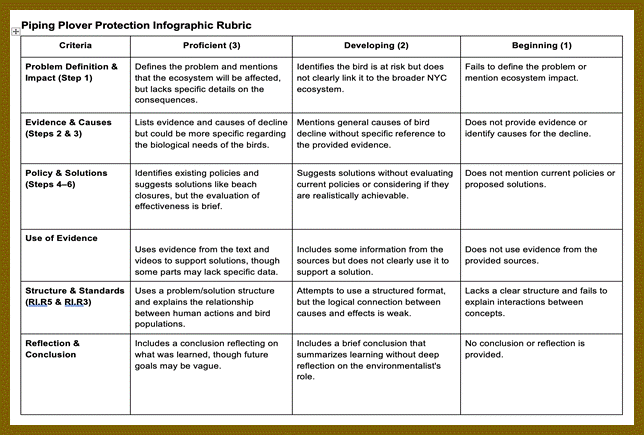
TASK: After reading several texts, watching videos, and using the Public Policy Analysis you will create an infographic where you will explain how New York City will be affected if the iconic Piping Plover of New York City are an extinct species and what can we do to help to save these birds. Use evidence from the text, videos and graph to support your solution.
PROCESS:
Environmentalists, complete the 6 Steps of the PPA to develop a solution.
The problem is that Piping Plover, their habitat has been invaded and many different species and many migrating birds to New York City. —financially and morally we owe it to New York City and our ecosystem. I need you to help us identify what’s wrong? Propose solutions, and evaluate outcomes, and how can we save these birds? Tell me what should we do? What should we stop doing? And what can we realistically achieve?
Piping plovers have suffered severe population declines and local extirpation due to human-caused threats. The extinction framing usually refers to extreme decline or risk of disappearance in certain areas, driven mainly by:
● Disturbance and habitat loss
● Predation pressures
● Reduced breeding success
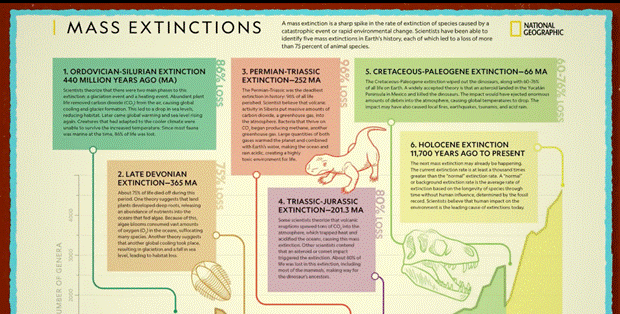
America's Lost Birds | The Extinct Bird Species of North America
PARROTS OVER PUERTO RICO:
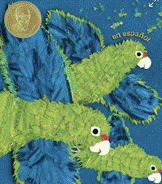
Parrots Over Puerto Rico by Susan L. Roth and Cindy Trumbore is a Caldecott Honor and Sibert Medal-winning nonfiction picture book that tells the story of the near-extinction and recovery of the Puerto Rican parrot.
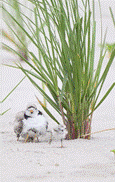
Endangered Piping Plover chicks are among the most fragile new New Yorkers, and it is our duty to fiercely protect them. These birds must forage for themselves from the moment they hatch, yet they remain unable to fly for at least 30 days. Providing them with necessary space and implementing temporary beach closures are vital steps to ensure their survival. While we have ample room for recreation, these creatures depend on the shoreline for their very existence. We urge you to join us in advocating for their protection!
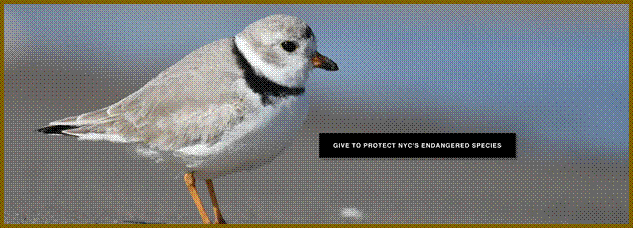
Endangered Piping Plover along our beaches
4. EVALUATE AN EXISTING POLICY
Piping Plovers are federally protected under the U.S. Endangered Species Act.
What You Need To Know
The NYC Plover Project is devoted to protecting the tiny shorebirds, which are endangered in the state.
Now they're partnering with Rockaway Park High School to help educate students there about the birds, and the beaches they visit each year.
The goal is to help create the next generation of stewards for a species that faces threats to its future.
Common Policies for addressing piping plover decline includes:
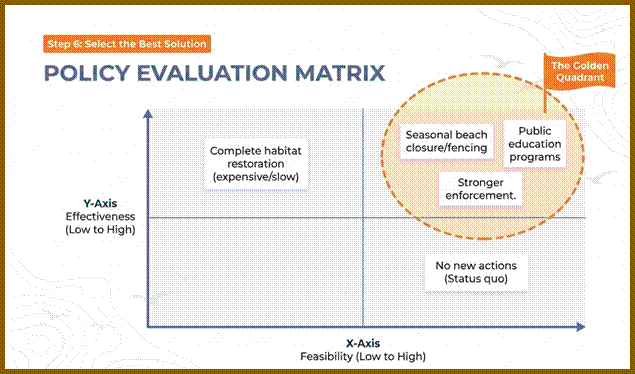
● No new actions (status quo)
● Seasonal beach closure/fencing
● Regulated access
● Stronger enforcement and Stronger penalties
● Predator management
● Public education & community programs
● Habitat restoration
6. SELECT THE BEST SOLUTION(FEASIBILITY VS EFFECTIVENESS)
EVALUATION:
CONCLUSION:
Here you will create a paragraph or two that reflect on what they learned as an environmentalist--make some connections and extend the learning by mentioning a future project or goal.
STANDARDS:
R5: In informational texts, compare and contrast the overall structure in two or more texts using terms such as sequence, comparison, cause/effect, and problem/solution. (RI).
Additional Standard Addressed:
R3: In informational texts, explain the relationships or interactions between two or more individuals, events, ideas, or concepts based on specific evidence from the text. (RI).