Too Much Plastic Waste In Our Community
Zorayma Azocar
Isaac Newton Middle School
INTRODUCTION:
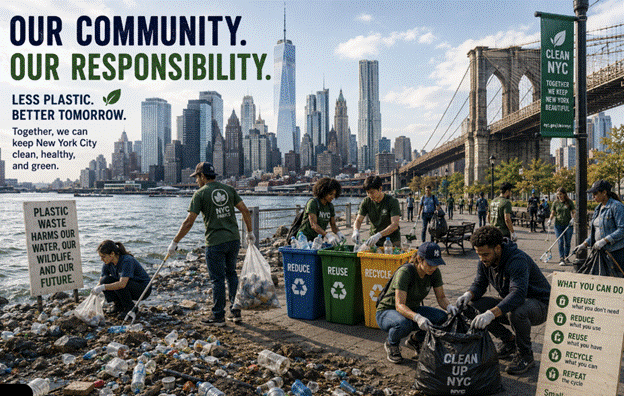
Every day, people in New York City use plastic bottles, bags, and containers. Many of these items are thrown away and end up in oceans, streets, parks, and neighborhoods, causing pollution and harm to animals, people, and communities.
Because plastic waste has become a growing problem in NYC, your borough has hired you to work as an Environmental Research Associate. Your job is to investigate how plastic waste affects your school and community and help develop possible solutions to reduce the problem.
Throughout this WebQuest, you will use the PPA
steps to:
🔍 define the problem
📊 gather evidence
🧠 evaluate solutions
🌎 create ideas that can help your community
By the end of this project, you will become a problem-solver and help make your community cleaner and safer.
TASK
As Environmental Research Associates for New York City, your job is to investigate the problem of plastic waste in communities and develop realistic solutions.
Working in groups, you will:
● complete the PPA steps
● analyze articles, videos, and data
● develop 2–3 possible solutions
● choose the best solution
● create a final presentation or poster explaining your ideas
PROCESS
Your final product must
include:
the problem
evidence/research
causes of plastic waste
possible solutions
your best solution
explanation of why your solution would help the community
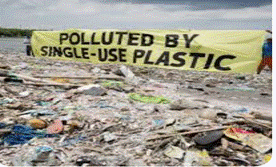
What is the issue with plastic waste?
🔗 Resource:
https://kids.nationalgeographic.com/nature/article/plastic-pollution
Sentence starter:
The problem is that __________.
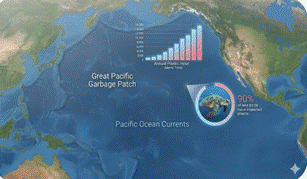
Find facts that show this problem is real.
🔗 Resources:
https://www.unep.org/plastic-pollution
https://oceanservice.noaa.gov/facts/plastic.html
Sentence starter:
One piece of evidence is __________.
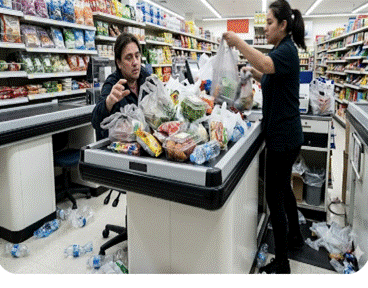
Use the articles, videos, and evidence from the previous PPA steps to identify possible causes of plastic waste in your school or community.
🔍 Think about:
● Why do people use so much plastic?
● Why is recycling sometimes difficult?
● Why does plastic end up in streets, parks, or oceans?
Examples:
• Too much plastic use
• Not enough recycling
• Lack of awareness
• Littering
• Single-use plastic products
📊 Use facts and evidence from your resources to support your ideas.
✏️ Sentence Starters:
● One cause of plastic waste is __________.
● This happens because __________.
● The evidence shows __________.
4. Evaluate an Existing Policy
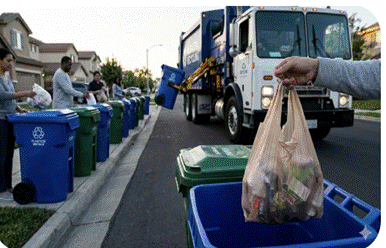
What is already being done?
🔗 Resource:
https://www.nyc.gov/site/dsny/what-we-do/recycling.page
Sentence starter:
One policy is __________. It helps because __________.
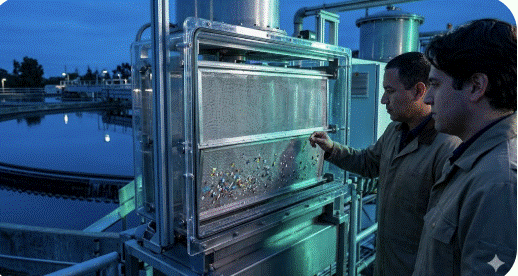
Using the evidence and information you gathered from the articles, videos, worksheets, and previous PPA steps, create 2–3 possible solutions to help reduce plastic waste in your school or community.
💡 Think about:
● How can people use less plastic?
● How can schools recycle more?
● What can students or communities do differently?
✏️ Sentence Starters:
● One possible solution is __________.
● This solution could help because __________.
● Another idea is __________.
6. Select the Best Solution (Feasibility
vs. Effectiveness)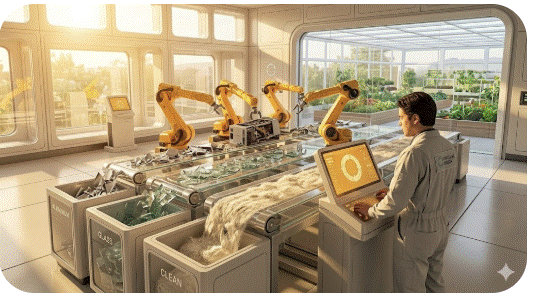
Choose the BEST solution based on:
● Feasibility (Can we actually do it?)
● Effectiveness (Will it really help?)
Sentence starter:
The best solution is __________ because __________.
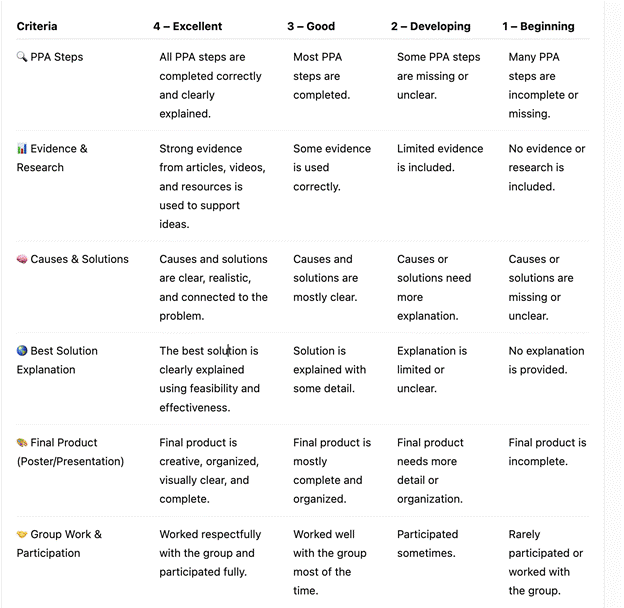
EVALUATION
CONCLUSION
In this WebQuest, you learned that plastic waste is a real problem that affects our environment, animals, schools, and communities. As Environmental Research Associates for your school community, you used the PPA steps to better understand the problem, examine evidence, and think about possible solutions.
You also learned that problems like plastic waste do not have one simple answer. It takes teamwork, critical thinking, and action to make a difference. The solutions you created can help reduce plastic waste in your school and community.
Now think about your daily life—what small changes can YOU make? For example, using reusable bottles, recycling, or using less plastic. Even small actions can make a big difference over time.
STANDARDS:
Discussion & Peer Interaction (6.SL.1): Students will engage in collaborative discussions (one-on-one, in groups, or teacher-led), building on others' ideas and expressing their own clearly.
Evidence-Based Reasoning (6.W.5, 6.R.1): Students must use evidence from literary or informational texts to support analysis, reflection, and research.
Human Impact (MS-ESS3-3): Students study how human activities affect ecosystems, including resource consumption and pollution.
Real-World Problem Solving (MS-ESS3-4): Students analyze data regarding environmental issues and propose solutions, such as reducing the impact of water usage or mitigating climate change.