Breakfast Waste at P.S. 90
Lisa Rosario
P.S. 90 1-212
INTRODUCTION:
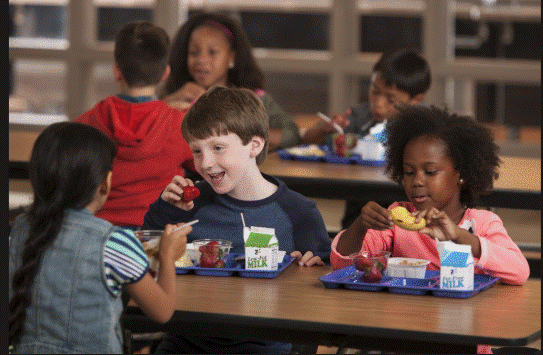
Breakfast is the most important meal of the day. Did you ever wonder what happens to the food that doesn’t get eaten? Uneaten fruit, cereal, also half full milk cartons, and packaged foods often end up in the trash. This creates food waste, costs money, and harms the environment. You have been asked by the New York City Department of Education (DOE) Chancellor’s Office to solve the problem of breakfast waste at P.S. 90.
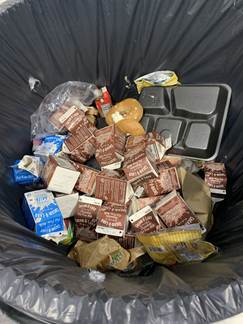
TASK: You will create a poster displaying what you learned using the Public Policy Analysis (PPA).
You will work in groups to create your poster. Use at least three photographs and your group’s solution for eliminating breakfast food waste at PS 90. You will use crayons, posterboard and pictures.
PROCESS
Below are resources to help you complete the steps of the PPA. Your teacher will assist you in reading through the websites, as you collect information for the Chancellor.
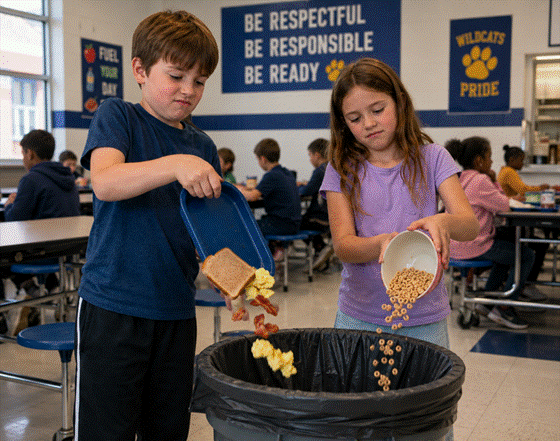
Investigate Breakfast Waste at PS 90
A. Observe breakfast time at your school for 2–3 days.
Record:
● Foods most often thrown away
● Approximate amount of waste
● Reasons students may not eat certain foods
● Time available to eat breakfast
● Packaging waste
Create a chart or table with your observations[1] .
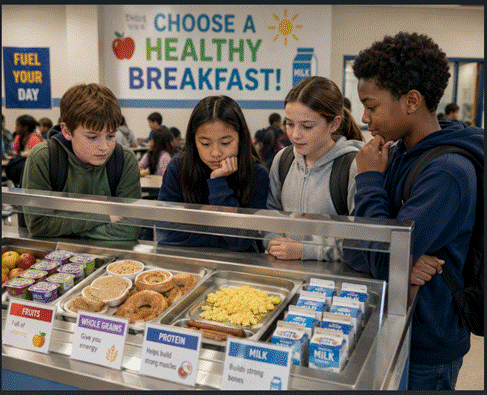
B. Participate in a student survey.
Possible questions:
● Which breakfast foods do students like most? least?
● Why do students throw food away?
4. Evaluate an Existing Policy
When students arrive late in P.S. 90Q, they are provided with a breakfast bag to eat in their classroom. The breakfast bag includes fruit, starch and occasionally a cheese stick.
Possible solutions:
● Share tables for unopened food
● Better menu choices based on survey results
● Students choose items they want to have for breakfast
6. Select the Best Solution (Feasibility
vs. Effectiveness)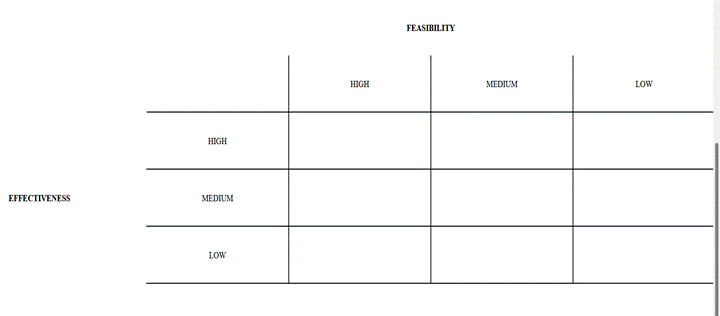
RESOURCES
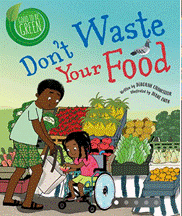 By
Deborah Chancellor and illustrated by Dhananjay Raje
By
Deborah Chancellor and illustrated by Dhananjay Raje
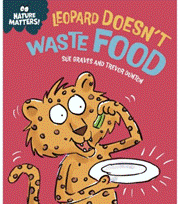 By
Sue Graves and illustrated by Trevor Dunton
By
Sue Graves and illustrated by Trevor Dunton
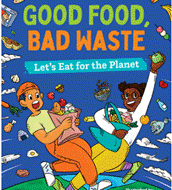 By Erin Silver
Food Waste in America: How You Can Help Rescue Food | Feeding America
EVALUATION
|
Criteria |
4 ⭐ Excellent |
3 😊 Good Job |
2 👍 Developing |
1 🌱 Beginning |
|
Understanding of Breakfast Food Waste |
I clearly showed what breakfast food waste is and why it matters. |
I showed what breakfast food waste is. |
I showed a little understanding of breakfast food waste. |
I need more help understanding breakfast food waste. |
|
PPA Problem & Solution |
I clearly explained the problem and shared strong ideas to help solve it. |
I explained the problem and shared a solution. |
I shared part of the problem or solution. |
I need help explaining the problem and solution. |
|
Pictures & Visuals |
My poster has colorful, neat, and helpful pictures that match my ideas. |
My poster has pictures that match my ideas. |
Some pictures match my ideas. |
I need more pictures or visuals. |
|
Writing & Labels |
My writing is complete, neat, and easy to read. |
Most writing is neat and easy to read. |
Some writing is hard to read or incomplete. |
My writing needs more work. |
|
Effort & Creativity |
I used my best effort and made my poster creative and organized. |
I showed good effort and organization. |
I showed some effort. |
I need to try harder on my work. |
|
Presentation Skills |
I spoke clearly, shared my ideas confidently, and answered questions. |
I shared my ideas clearly. |
I shared a few ideas. |
I need help sharing my ideas. |
CONCLUSION
🎉 Congratulations! 🎉
The Chancellor is so happy with the amazing results of your Breakfast Food Waste Project! Because of your hard work and smart ideas, your posters may be displayed in schools all over the district to help other students learn how to waste less food and make healthy choices. You are becoming real problem-solvers and community helpers!
STANDARDS:
1W2: Write an informative/explanatory text to introduce a topic, supplying some facts to develop points, and provide some sense of closure.
W.1.7 — Participate in shared research and writing projects.
W.1.8 — Recall information from experiences or gather information from sources.
1SL6: Express thoughts, feelings, and ideas clearly, using complete sentences when appropriate to task, situation, and audience.