Violence In Our New York City Parks
Ms. Annette Harris
P.S. 116Q Second Grade
INTRODUCTION: Our playgrounds were created to provide a safe space for children to gather, play and have fun. Today, greater awareness and concerns have reached an all time high for our playgrounds and parks. While overall violence in New York City has reached a record low, the violence on our New York City playgrounds have reached a record high in which our youth are either the target or the cause. Our stories we read this week focused on the roles of park rangers, being safe and what to do when you witness or experience harm in the park.
Today, many people use the reasons of such incidents as being in poverty, low self-esteem, alcohol and drug abuse as well as parental neglect. Not fully understanding the creation of parks for teamwork, good habits and social skills diminishes its effectiveness of usage and creates areas of negativity to happen when in misuse. You are now working for the NYC Department of Parks Department as Jr. Park Rangers and will help in finding a solution for the violence in our NYC parks.
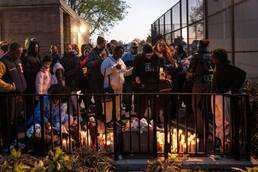
Courtesy: New York Times, Queens, NY, Published April 20, 2026
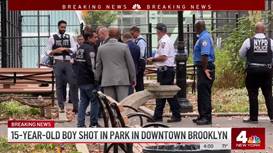
Courtesy: NBC News, Brooklyn NY, March 9, 2026
TASK: Today as park employees, we are going to persuade the NYC Park Commissioner, Ms. Tiricia Shamaura, to listen to your thoughts about violence in the playgrounds. You will be divided into groups and given assignments to persuade her to look at some of your solutions as a way to take back our safe spaces to play and end the violence in our parks, using the Public Policy Analyst Steps (PPA).
Park Rangers: you will identify your responsibilities as a Ranger. Use the information from the story and explain how you can assist in addressing the violence, in a letter to the commissioner.
Safety Committee: you will read your story and discuss ways children can protect themselves while inside the park. You will make a video for safe and unsafe behaviors that we find in our playgrounds.
SEL Committee: You will talk about feelings and how to find support when bad things happen and design a poster about finding someone to talk to when violence happens.
PROCESS
First Read your stories for the group you represent:
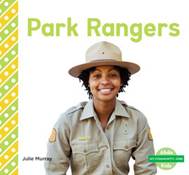
Park Rangers: Constelancio, Farrah, Nathaniel, Wynter, Devontae and Amir
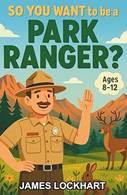
By James, Lockhart (2025)
Safety Committee: Fatiha, Mya, Jace, Jaylin, Nathaniel
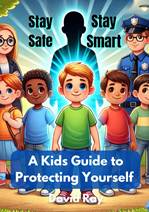
By David Ray, (2025)
SEL Committee: Abrar, Summer, Shyara, Ashton, Jamari, Josue
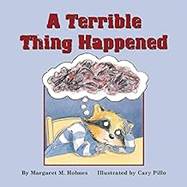
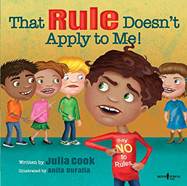
By Margaret M. Holmes, 2020
1. Define the Problem: Violence in our New York City playgrounds have reached a record high.
Park Rangers: They provide a uniform presence to ensure safety, inform the public about Parks Rules & Regulations, and help enforce safety standards in parks. To be a Jr. park ranger according to our story is a lot of responsibility and it makes us active workers of nature and gives us a sense of responsibility for the environment while making learning about keeping our parks safe, fun and active.
Safety Committee: Our text and research showed us that we must use our voice and alert others when something is not correct. By staying aware and informed of the rules of the park this committee investigated the number of incidents that have been reported and actions that were taken to help alleviate the issues. This committee research had them discussing conflict resolution skills as in this article. Conflict Resolution Skills Article
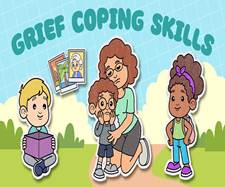
SEL: Providing social, emotional and learning support when something tragic happens to a friend or family member on a playground is a key component in how people address the violence they have witnessed or caused. While our book talked about how to use our emotions when interacting and discussing it with an adult we got more evidence from Helping Children manage Distress which we were able to look at the different ways to guide those who may have direct or indirect relationships with those involved in the violence.
3. Identify the Causes: These steps are what the students from each role captured and recorded based on their assignments.
Park Rangers: Park Ranger group
1. There is not enough staff in the parks to help patrol the parks.
2. Not enough money available to hire people.
3. Not enforcing the current rules that have been put in place.
Safety Committee: Safety Committee
1. Lack of supervision
2. Poor lighting conditions
3. No cameras to catch inappropriate behaviors
SEL: SEL Committee
1. Poor social skills
2. Interpersonal conflicts, different definitions of what “fun” is.
3. Parks become play deserts for children to become part of undesirable environments.
4. Evaluate an Existing Policy
1. Park Hours is from 6 am-10 am
2. Safety Enforcement
3. Prohibited items.
1. Increase the number of officers in the park before, during and after closing hours to enforce the laws already in place.
2. Provide more recreational activities for all ages to promote social skills.
3. Emergency call boxes in every park when an officer can not be located.
6. Select the Best Solution (Feasibility vs. Effectiveness)
Feasibility
|
|
High |
Medium |
Low |
|
High |
Increase the number of officers in park before, during and after closing hours |
|
|
|
Medium |
|
Provide more recreational activities for all ages to promote social skills |
|
|
Low |
|
Emergency call boxes located throughout the park when an officer can not be found. |
|
Additional Resources:
Park Rangers: Jr. Park Ranger Video
Safety Committee: Playground Safety
SEL: Helping Children with tragic events Conflict Resolution for Kids in 60 seconds 🧠💥 A Social Emotional Learning Must-Watch | SEL for kids
 https://www.peaceisalifestyle.com
 https://www.innovatingjustice.org/program/save-our-streets-s-o-s/
 https://www.nycgovparks.org/events/kids
Evaluation Rubric
Park Rangers:
Rubric for Letter Writing
Student Name:
|
Criteria |
Exceeding (4) |
Proficient (3) |
Developing (2) |
Beginning (1) |
|
Understanding Rules & Laws |
Accurately explains why rules/laws are needed to keep communities safe and fair, providing multiple examples. |
Explains that rules/laws keep communities safe and fair. |
Mentions that rules exist but has difficulty explaining their purpose. |
Struggles to define what a rule or law is. |
|
Common Good |
Explains in detail how specific laws help everyone (common good) and why they are necessary. |
Identifies that laws/rules are designed to help the group (common good). |
Understands that laws help, but struggle to connect them to the community as a whole. |
Does not understand that laws aim to benefit the community. |
|
Fairness & Consequences |
Explains what makes a rule fair/unfair and identifies the consequences of violating them. |
Recognizes that rules should be fair and that breaking them has consequences. |
Identifies some rules but cannot explain why they are fair or what happens if broken. |
Cannot distinguish between fair and unfair. |
|
Responsibility/Authority |
Identifies specific local leaders/authorities and describes their role in making/enforcing laws. |
Identifies who makes and enforces rules/laws in the community. |
Mentions a leader but has trouble explaining their role. |
Does not know who makes or enforces rules. |
Safety Committee: Rubric For Video
Name:
|
Criteria |
⭐⭐⭐ (Exceeds) |
⭐⭐ (Meets) |
⭐ (Developing) |
|
Identify Cause & Effect |
Identifies 3+ clear cause-and-effect pairs showing how a community changed. |
Identifies 2 clear cause-and-effect pairs showing how a community changed. |
Identifies 1 cause-and-effect pair, or pairs are unclear. |
|
Understanding Change |
Explains in detail why the change happened and its lasting impact on the community. |
Explains why the change happened and its direct result. |
Mentions a change but cannot explain the cause or the result. |
|
Using Signal Words |
Uses words like because, so, if...then to connect ideas correctly. |
Uses some signal words, mostly accurate. |
Struggles to connect cause and effect with proper language. |
|
Evidence/Example |
Provides specific examples (e.g., "More cars so they built a bigger road"). |
Provides general examples of community change. |
Examples are missing or irrelevant to community changes. |
SEL: Rubric for Poster on how character respond to major events
|
Criteria |
4 - Exceeds |
3 - Meets (Target) |
2 - Approaching |
1 - Beginning |
|
RL.2.3: Character Response (Literary) |
Describes major events, explicitly explains why a character responded a certain way, and notes changes in behavior. |
Identifies major events and accurately describes how a character responds/acts. |
Mentions character actions but struggles to connect them to specific events or challenges. |
Retells story events without focusing on the character's response or actions. |
|
RI.2.3: Connections (Informational) |
Describes connections between all key ideas, events, or steps, using specific details. |
Describes the connections between a series of historical events, scientific ideas, or steps. |
Identifies individual ideas/events but cannot explain how they connect or relate to each other. |
Lists facts from the text with little or no logical connection. |
|
Evidence & Detail |
Uses multiple specific examples from the text to support descriptions. |
|
|
|
CONCLUSION
Our parks are gathering places for everyone to socialize and have fun while doing it. There are so many things we can do in the park besides playing, we can have picnics with our families, listen to music concerts and watch sports games.
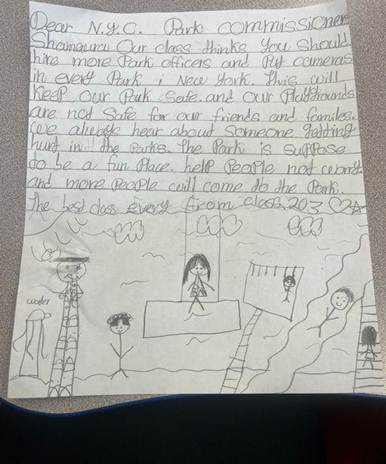
Everyone should come to a N.Y.C. park and feel safe at all times. Having more officers in the parks, cameras and even ways to say there is an emergency will help when situations may happen and we need immediate help.
STANDARDS:
ELA Standandards:2W1: Write an opinion about a topic or personal experience, using clear reasons and relevant evidence
2R3: In literary texts, describe how characters respond to major events and challenges. (RL) In informational texts, describe the connections between ideas, concepts, or a series of events. (RI)
2R4: Explain how words and phrases in a text suggest feelings and appeal to the senses. (RI&RL)
2R9: Make connections between self and text (texts and other people/ world). (RI&RL)
Social Studies Standards:
2.4a Communities have the responsibility to make and enforce fair laws and rules that provide for the common good
2.4c Citizens provide service to their community in a variety of ways.
2.7a Cause-and-effect relationships help us to understand the changes in communities.