Ocean Waste Harms Marine Animals
Cynthia Jenkins School
Click here to listen to your teacher explain the assignment:
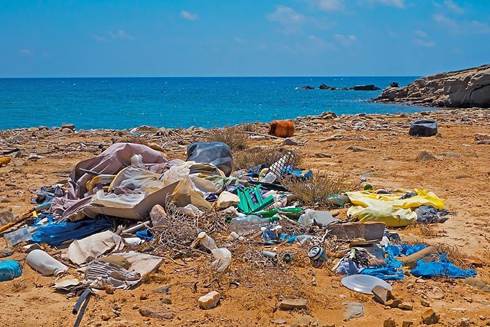
INTRODUCTION: Ocean waste kills over 100 million marine animals every year, impacting everything from tiny plankton to giant whales. Plastic pollution makes up the vast majority of this debris, creating an escalating crisis for global marine life. [1, 2, 3, 4, 5]
Primary Threats to Marine Life
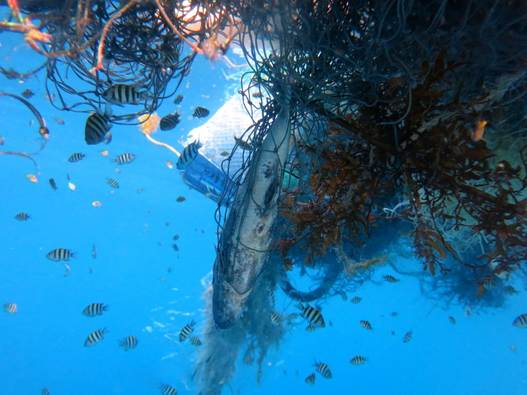
● Entanglement: Animals get trapped in abandoned fishing gear, ropes, and plastic packing bands.
● Suffocation: Discarded plastic bags and wrapping block air passages of marine mammals and sea turtles.
● Starvation: Marine creatures eat plastic debris, which fills their stomachs but offers zero nutrients.
● Toxic Poisoning: Plastics absorb chemical pollutants in the water, poisoning animals from the inside out.
● Habitat Destruction: Heavy debris breaks coral reefs and smothers critical seafloor ecosystems. [1, 2, 3, 4, 5]
TASK:
You are a marine biologist who has been hired to identify multiple solutions to address local ocean pollution. Ocean waste, particularly plastic debris and abandoned fishing gear, poses a severe and multifaceted threat to marine ecosystems. According to estimates tracked by organizations like Condor Ferries, over 100 million marine animals die every year due to the impacts of ocean plastic and waste. The destruction occurs primarily through ingestion, physical entanglement, and chemical poisoning. [1, 2, 3, 4, 5]
You are currently working with the National Wildlife & Fisheries Department to determine which solutions might be the most effective and feasible to solve some of these above-mentioned issues. Your mission will be to research 3 causes of ocean pollution and the harm it causes local marine animals. You will examine the problem using the steps of the PPA to arrive at your preferred policy. After, your task will be to create a website with an action plan to address the concerns and assess the best course of action.
PROCESS
The Planning Committee
You are on a committee of four. Each member has a specific role. Use the research links below to gather your evidence.
Group Member 1: The Problem Specialist
● Role: Clearly state the scope of ocean pollution and gather current data.
● Research: Use the NOAA Marine Debris Program to find statistics on local impact and National Geographic Kids to define the types of pollution (plastic, chemical, noise). [2, 3, 4, 5]
Group Member 2: The Policy Analyst
● Role: Identify the root causes and evaluate existing laws.
● Research: Look into the Clean Water Act at the EPA and explore the Ocean Dumping Act. See how these policies apply to the ocean. [6, 7, 8]
Group Members 3 & 4: The Solution Architects
● Role: Develop three distinct, solid solutions to the pollution problem.
● Research: Explore innovative technology like ocean clean-up devices and community-led solutions like reducing single-use plastics or organizing neighborhood cleanups. [9, 10, 11]
Refer to PPA Guidance Steps Below:
4. Evaluate an Existing Policy
6. Select the Best Solution (Feasibility vs. Effectiveness)
Decision Tool: Feasibility vs. Effectiveness Matrix
Use the table below to compare your three solutions.
● Effectiveness: How much pollution will this actually stop? (1 = A little, 5 = A lot)
● Feasibility: How easy and affordable is it to do right now? (1 = Very hard/expensive, 5 = Very easy/cheap)
|
Proposed Solution |
Effectiveness (1-5) |
Feasibility (1-5) |
Total Score |
|
Solution 1: (e.g., School Plastic Ban) |
|
|
|
|
Solution 2: (e.g., Beach Cleanup Day) |
|
|
|
|
Solution 3: (e.g., New Filtration Tech) |
|
|
|
The solution with the highest total score is often your "Best Solution" to present!
Congratulations, Marine Biologists! By completing this mission, you have moved beyond simply identifying a problem to constructing a real-world framework for change.
Reflect on this:
How do the economic costs of your solution compare to the environmental cost of doing nothing? As you move forward, remember that the "best" solution isn't just the one that works on paper, but the one that a community can actually sustain.
EVALUATION & Scoring Rubric:
Your performance will be graded based on the rubric below:
|
Category |
Emerging (1) |
Proficient (3) |
Exemplary (5) |
|
Problem & Evidence |
Problem is vague; little data provided. |
Problem is clear with some supporting data. |
Detailed problem statement with high-quality data/visuals. |
|
Policy Evaluation |
Policies mentioned but not explained. |
Explains one policy and its basic limitations. |
Deep analysis of existing policies and why they aren't enough. |
|
Proposed Solutions |
Solutions are unrealistic or generic. |
Three logical solutions provided with basic reasoning. |
Three innovative solutions with detailed pros/cons for each. |
|
Final Selection |
Selection lacks a clear "why." |
Chooses a solution based on basic effectiveness. |
Clear justification using a Feasibility vs. Effectiveness scale. |
|
Website Quality |
Hard to navigate; many errors: no action plan |
Organized and easy to read. Action plan is underdeveloped |
Professional layout, interactive elements, and clear citations, and clear action plan. |
STANDARDS:
This project aligns with the following academic standards:
● Next Generation Science Standards (NGSS): HS-ESS3-4: Evaluate or refine a technological solution that reduces impacts of human activities on natural systems.
● Common Core ELA: CCSS.ELA-LITERACY.WHST.9-10.6: Use technology, including the Internet, to produce, publish, and update individual or shared writing products.