Adolescent Obesity

Y.Reinoso
PS28
 INTRODUCTION
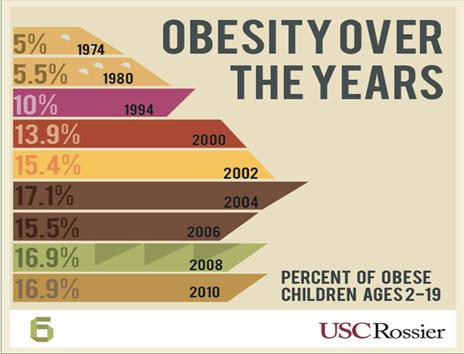
In the past 30 years childhood obesity has more than doubled in children and quadrupled in adolescents. Adolescent obesity in the United States has many important implications for both the health and well-being of the individual and society. Some specific negative impacts of obesity on health include increased susceptibility to a host of diseases, chronic health disorders, psychological disorders, and premature death, 1 2 which in turn add billions of dollars in health care costs each year. 3 Excess medical costs due to overweight adolescents are estimated at more than $14 billion per year. 3 Furthermore, adolescent obesity affects our nation’s ability to protect itself; more than a quarter of 17- to 24-year-olds are not fit to enroll in the military due to their weight. 4
Adolescence is a crucial period for establishing healthy behaviors. Many of the habits formed during this developmental stage will last well into adulthood. 5 Although obesity is a complex problem not yet fully understood by researchers, by addressing the known factors that contribute to obesity in adolescence, policymakers can help ensure a healthy and productive adulthood for our nation’s youth.
Obesity and poor nutrition – combined with mental health disorders and emotional problems, violence and unintentional injury, substance use, and reproductive health problems – form part of a complex web of potential challenges to adolescents’ healthy emotional and physical development. 6
TASK
You are being asked to develop campaigns to promote physical activity and/or better food choices for your peers. You can also design a website on a large poster board and presenting your findings to the class in a 3-5 minute oral presentation. Your written and oral presentation will address the problems of adolescent obesity and develop a solution to combat the problem. Using the six-step Public Policy Analyst Approach, you will create either a Power Point presentation of at least ten slides or a typed, double spaced, and a 200-400 worded report which will go on the website.
PROCESS
You will use the steps of the PPA outlined below:
1) Define the problem- Worksheet#1: What is the nature of the problem? Please include the BMI index used to evaluate overweight individuals. Use resource #1 for more information. Are lower income families or communities more prone to this problem? What are the undesirable effects of being overweight?
2) Gather the evidence: Worksheet #2: Select one site to show that the problem exists.
3) Identifying the causes: Worksheet: #3: Support the factors that contribute to the problem that you have identified.
4) Analyzing existing public policy solutions: Worksheet #4: What are the advantages and disadvantages of the existing policies?
5) Proposing an original public policy solution: Workshop #5: Although we have discussed two solutions (better nutrition and more activity) please select specific subcategories.
6) Select the best public policy solution: Worksheet # 6: Can your policy be easily enacted by a government agency? Will your policy produce results that will lessen the social problem?
RESOURCES
· http://www.nccp.org/publications/pub_977.html
· http://www.cdc.gov/HealthyYouth/obesity/facts.htm
· http://www.medicinenet.com/childhood_obesity/article.htm
· http://fnic.nal.usda.gov/weight-and-obesity/adolescent-and-childhood-obesity
· http://www.cdc.gov/obesity/data/childhood.html
EVALUATION
|
|
CRITERIA |
PTS |
|||
|
|
UNSATISFACTORY |
MINIMAL SATISFACTORY |
SATISFACTORY |
EXCELLENT |
|
|
Less than 65 |
65-79 |
80-90 |
90-100 |
||
|
Organization |
Audience cannot understand presentation because there is no
sequence of information. |
Audience has difficulty following presentation because student
jumps around. |
Student presents information in logical sequence which audience
can follow. |
Student presents information in logical, interesting sequence
which audience can follow. |
____ |
|
Content Knowledge |
Student does not have grasp of information; student cannot
answer questions about subject. |
Student is uncomfortable with information and is able to answer
only rudimentary questions. |
Student is at ease with content, but fails to elaborate. |
Student demonstrates full knowledge (more than required)with explanations and elaboration. |
____ |
|
Visuals |
Student used no visuals. |
Student occasional used visuals that rarely support text and
presentation. |
Visuals related to text and presentation. |
Student used visuals to reinforce screen text and presentation. |
____ |
|
Mechanics |
Student's presentation had four or more spelling errors and/or
grammatical errors. |
Presentation had three misspellings and/or grammatical errors. |
Presentation has no more than two misspellings and/or
grammatical errors. |
Presentation has no misspellings or grammatical errors. |
____ |
|
Delivery |
Student mumbles, incorrectly pronounces terms, and speaks too
quietly for students in the back of class to hear. |
Student incorrectly pronounces terms. Audience members have
difficulty hearing presentation. |
Student's voice is clear. Student pronounces most words correctly.
|
Student used a clear voice and correct, precise pronunciation of
terms. |
____ |
|
|
|
|
|
Total----> |
__ |
standards
ENGLISH LANGUAGE ARTS:
E1C Read and comprehend informational materials.
E2C: Read and comprehend informational materials.
E3B: Participate in group meetings.
HEALTH PERFORMANCE:
S5c: Uses evidence from reliable sources to develop descriptions, explanations and models.
S5: Scientific thinking
S5f: Works individually and in teams to collect and share information.
S6d: Acquires information from multiple sources.
CONCLUSION
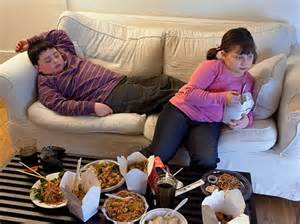
Obesity in children and adolescents is generally caused by the lack of physical activity, unhealthy eating patterns or a combination of the two. After completing this research using the PPA process and this WebQuest, you should have learned many issues concerning adolescent obesity. You will be able to analyze articles and extract critical information. In addition, you will also be able to explore this topic using the internet as a main source of information. In addition you will create new policies that contribute to the health and well being of the general public.